

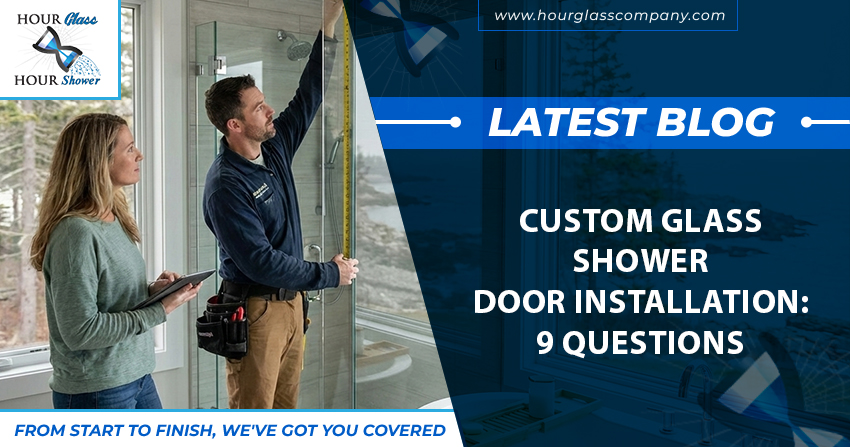

Custom Glass Shower Door Installation: 9 Questions
Custom glass shower door installation is one of the most popular bathroom upgrades for homeowners who want a modern, clean, and upscale look. Frameless and custom glass shower doors instantly open up a space, improve functionality, and add long-term value to a home. However, the success of this upgrade depends almost entirely on who installs it.
Unlike stock shower doors, custom glass shower doors must be precisely measured, professionally fabricated, and expertly installed. Small mistakes can lead to leaks, damaged tile, misaligned doors, or even safety hazards. That’s why choosing the right installer is just as important as choosing the design itself.
Before hiring a professional, ask these nine essential questions to make sure your custom glass shower door installation is done correctly, safely, and built to last.
Why Custom Glass Shower Door Installation Is Different
Custom glass shower doors are not one-size-fits-all products. Every bathroom is different, and factors like wall plumbness, floor slope, tile thickness, ceiling height, and ventilation all affect how a shower door must be designed and installed.
Professional custom glass shower door installation ensures:
Accurate measurements after tile is complete
Proper glass thickness for safety and stability
Hardware that supports heavy glass panels
Leak control without bulky frames
Compliance with safety and building codes
Hiring an installer without specialized experience in shower glass often leads to long-term problems that cost more to fix than doing it right the first time.
Question 1: Do You Specialize in Custom Glass Shower Door Installation?
The first and most important question to ask is whether the installer specializes in custom glass shower door installation.
Many companies offer glass services, but not all of them regularly install shower doors. Shower enclosures require a different skill set than windows or storefront glass. An experienced shower door installer understands moisture control, tile surfaces, and the structural demands of heavy glass panels.
A qualified professional should:
Regularly install custom and frameless shower doors
Have experience with complex bathroom layouts
Understand common shower drainage and leak issues
If shower doors are only a small part of their business, that’s a potential red flag.
The first and most important question to ask is whether the installer specializes in custom glass shower door installation.
Many companies offer glass services, but not all of them regularly install shower doors. Shower enclosures require a different skill set than windows or storefront glass. An experienced shower door installer understands moisture control, tile surfaces, and the structural demands of heavy glass panels.
A qualified professional should:
Regularly install custom and frameless shower doors
Have experience with complex bathroom layouts
Understand common shower drainage and leak issues
If shower doors are only a small part of their business, that’s a potential red flag.
Question 2: What Types of Custom Shower Doors Do You Install?
Not every shower door works in every space. A professional installer should be able to guide you through different configurations and explain which option fits your bathroom best.
Ask whether they install:
Frameless shower doors
Semi-frameless shower doors
Hinged or pivot doors
Sliding or bypass shower doors
Neo-angle or corner enclosures
Steam shower glass enclosures
An experienced installer will explain the pros and cons of each option based on layout, water control, and daily use—not just aesthetics.
Question 3: How Do You Measure for a Custom Glass Shower Door?
Precise measurement is the foundation of successful custom glass shower door installation. Even minor inaccuracies can cause misalignment or leaks.
Professional measurement should include:
Measuring after tile and grout are fully installed
Accounting for walls that are not perfectly plumb
Checking floor slope and curb angles
Confirming ceiling height and door swing clearance
Measurements should never be rushed or estimated. Custom glass cannot be trimmed on site—if it’s fabricated incorrectly, it must be remade.
Question 4: What Type and Thickness of Glass Do You Use?
Glass quality plays a major role in safety, durability, and appearance.
Ask about:
Tempered safety glass (required by code)
Glass thickness (3/8” or 1/2” for frameless doors)
Clear vs low-iron glass
Frosted or patterned options
Protective coatings to reduce water spots
Thicker glass provides greater stability and a premium feel, especially for frameless shower doors. A professional installer will recommend the appropriate thickness based on door size and configuration.
Question 5: What Hardware Is Used for Frameless Shower Doors?
Hardware is just as important as the glass itself. Frameless shower doors rely on hinges, brackets, and handles to support significant weight.
Ask about:
Material quality (solid brass or stainless steel)
Hinge weight ratings
Corrosion-resistant finishes
Matching handles and towel bars
Low-quality hardware can corrode, loosen, or cause the door to sag over time. High-grade hardware ensures smooth operation and long-term durability.
Question 6: How Do You Prevent Water Leaks?
Leak prevention is one of the biggest concerns homeowners have with frameless shower doors.
A professional installer should explain:
Seal placement and water deflection strategies
Minimal sweeps or clear seals used where necessary
Door positioning relative to shower heads
Proper slope and drainage considerations
While frameless shower doors are not completely watertight, proper installation should control water effectively without bulky frames or excessive seals.
If an installer says frameless doors “always leak,” that often indicates lack of experience.
Question 7: Are You Licensed, Insured, and Code-Compliant?
This question protects both your home and your finances.
A reputable installer should:
Be properly licensed (where required)
Carry liability insurance
Use certified tempered safety glass
Follow local building and safety codes
Glass is heavy and fragile. Insurance ensures you are protected in case of damage or injury during installation.
Question 8: What Is the Installation Timeline?
Understanding the full timeline helps avoid frustration and delays.
Ask about:
Time from measurement to fabrication
Average fabrication lead time
Installation day duration
Cleanup and removal of old materials
Most custom glass shower doors are fabricated within one to three weeks after final measurements. Installation typically takes only a few hours when done correctly.
Clear communication is a sign of professionalism.
Question 9: Do You Offer a Warranty or Guarantee?
A professional installer should stand behind their work.
Ask about:
Workmanship warranties
Hardware manufacturer warranties
Service policies for adjustments
Glass breakage coverage
A warranty demonstrates confidence in installation quality and materials. Always request warranty details in writing.
Common Mistakes Homeowners Make When Hiring a Shower Door Installer
Many installation problems stem from avoidable mistakes, including:
Choosing the lowest price instead of experience
Hiring general contractors instead of glass specialists
Ignoring glass thickness and hardware quality
Skipping questions about leak prevention
Not reviewing past work or references
Custom glass shower door installation is not an area where shortcuts pay off.
Benefits of Professional Custom Glass Shower Door Installation
Hiring a qualified professional provides:
Precise fit and clean aesthetics
Safe handling of heavy tempered glass
Long-term performance without sagging or leaks
Protection for tile and waterproofing systems
Compliance with safety standards
A properly installed shower door should function flawlessly for decades.