

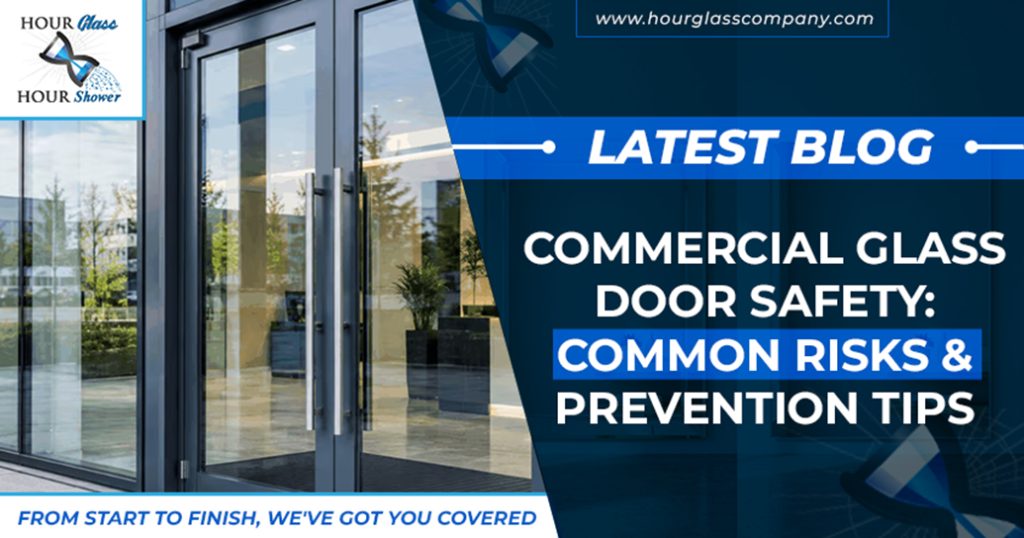
Commercial glass doors create bright, modern entrances for stores, offices, clinics, restaurants, and other businesses. However, their transparency, frequent use, and moving hardware can create safety risks. Common problems include people walking into barely visible glass, impact-related breakage, damaged glazing, faulty closers or operators, pinch and collision hazards, trip points, and accessibility issues.
The safest approach is to treat the entrance as a complete system. Appropriate safety glazing, clear visual recognition, properly installed hardware, controlled door movement, accessible design, adequate lighting, and preventive maintenance all work together. In the United States, architectural glazing is covered by 16 CFR Part 1201, while ANSI Z97.1 provides safety-glazing performance and testing criteria. Local building codes can add requirements for particular applications.
1. People walking into clear glass
A transparent door can be surprisingly difficult to recognize when reflections, bright daylight, interior displays, or similar-colored backgrounds make the opening visually disappear. Someone may assume the panel is open and collide with it, causing bruising, cuts, or more serious injury. Busy entrances, frameless doors, sidelites, and areas with fast-moving foot traffic deserve particular attention.
2. Glass breakage and sharp fragments
Ordinary glass can produce sharp shards when it breaks. Safety glazing is designed to reduce the likelihood of serious cutting or piercing injuries when glazing fails. Tempered glass is heat-treated and is intended to fracture into smaller fragments, while laminated glass uses layers that can help hold broken pieces together. The appropriate product depends on the opening, location, impact exposure, security needs, and applicable requirements. Do not assume that a product described as “tempered,” “laminated,” or “safety glass” automatically satisfies every requirement for a specific commercial door. The glazing specification, markings, framing, installation, and applicable code all matter.
3. Damaged glass, frames, or hardware
Cracks, chips, loose fittings, worn pivots, damaged closers, misalignment, and failing seals can turn a small defect into a larger hazard. A door that rubs its frame may indicate alignment or hardware trouble. A closer that is too aggressive can make the entrance difficult to use or cause unexpected closing.Commercial entrances experience repeated operating cycles, so preventive maintenance is safer than waiting for failure. If a pane is cracked or structurally compromised, restrict access and have it assessed by a qualified glazing professional instead of making an improvised repair.
4. Automatic-door and closing hazards
Automatic and power-assisted glass doors depend on correctly functioning sensors, operators, controls, and safety features. A door that opens or closes unpredictably, fails to detect a person, or operates inconsistently can create collision, pinch, or access problems. The ADA Standards address automatic and power-assisted doors and reference ANSI/BHMA standards for their operation.
5. Accessibility and trip hazards
Safe access means more than simply fitting through the opening. Door width, opening force, maneuvering clearance, thresholds, hardware, closing speed, and vision panels affect how people with different mobility or vision needs use an entrance. The ADA Standards generally require accessible doorways to provide at least 32 inches of clear opening and address vision lights and door operation.
Risk | What to check | Prevention |
Clear glass is hard to see | Contrast, reflections, lighting, sightlines | Use appropriate visual markings and improve contrast |
Impact or breakage | Glazing type, location, cracks, chips | Specify compliant safety glazing and replace damaged panes |
Door closes unpredictably | Closer, pivots, hinges, alignment | Adjust and maintain hardware professionally |
Automatic-door malfunction | Sensors, activation, closing behavior | Test and repair safety functions promptly |
Trip/access problem | Thresholds, mats, floor transitions | Keep routes clear and maintain accessible transitions |
Exit-route problem | Lighting, signs, obstructions | Keep exits visible, illuminated, and unobstructed |
Make the glass easy to recognize
Visual contrast is one of the simplest ways to reduce accidental impact. Use appropriate, durable markings or design elements that distinguish a glass door from a fixed panel. Check visibility from both directions and under different lighting conditions. Keep temporary displays from creating confusing sightlines.
Do not rely on a tiny decal if the surrounding entrance remains difficult to interpret. Lighting, floor layout, queues, furniture, reflections, and adjacent glazing can all influence whether people understand where the door is.
Choose glazing for the actual application
During construction or replacement, have the architect, contractor, or qualified glazier verify the glazing specification against applicable federal and local requirements. ANSI Z97.1-2026 is the current ANSI safety-glazing standard and establishes performance specifications and test methods; it does not itself determine where safety glazing must be used.
Selection can depend on door type, location, glass size, proximity to walking surfaces, impact exposure, fire-rating requirements, security needs, and the surrounding construction. A product that works in one entrance may not be appropriate for another.
Inspect the complete door assembly
Glass for cracks, chips, edge damage, or impact marks.
Door alignment, swing or sliding action, closing speed, and latching.
Hinges, pivots, closers, patch fittings, handles, locks, and fasteners.
Automatic operators, activation devices, sensors, and safety functions.
Thresholds, floor transitions, mats, and the approach area.
Safety markings, visibility, lighting, and signs.
Exit-route visibility and unobstructed access where applicable.
OSHA requires covered workplace exit routes to have adequate lighting and requires exit doors and routes to remain clearly visible and unobstructed.
Respond quickly when glass is damaged
If a commercial glass door cracks or breaks, treat the area as hazardous. Keep customers and employees away, prevent contact with loose fragments, control access, and arrange professional assessment or emergency glazing service. Do not allow untrained staff to handle large shards or dismantle door hardware.
After replacement, verify the complete opening—not just the appearance of the new pane. Confirm that the replacement glazing, markings, frame, hardware, door operation, and surrounding access route remain appropriate for the application.
Commercial glass door safety checklist
Is the glass clearly recognizable as a door or fixed panel?
Is the glazing appropriate for its location and applicable code requirements?
Are there cracks, chips, loose fittings, or impact damage?
Does the door open, close, and latch smoothly without excessive force?
Are hinges, pivots, closers, locks, handles, and fasteners secure?
If automatic, do sensors and safety features work consistently?
Are thresholds and floor transitions safe and accessible?
Is the doorway adequately lit and free of visual obstructions?
Are exit routes and doors visible and unobstructed where applicable?
Are inspection findings documented and followed up?
When should a commercial glass door be repaired or replaced?
Repair may be appropriate when the problem is a serviceable hardware, alignment, or adjustment issue and the existing assembly remains suitable. Replacement is more likely when the glass is cracked, the glazing is unsuitable for the location, the frame or fittings are significantly damaged, repeated failures occur, or the entrance no longer meets applicable requirements.
When uncertain, have the complete opening evaluated by a qualified commercial glazing or door professional. A replacement pane that does not match the required glazing performance, dimensions, fittings, or framing system can create a new hazard.
Yes, they can be safe when the glazing, framing, hardware, operation, visibility, accessibility, and maintenance are appropriate for the application. Safety depends on the complete door assembly, not just the glass.
There is no single best glass for every door. Tempered and laminated safety glazing are common options, but selection depends on location, impact risk, fire or security requirements, design, and applicable codes and standards.
Make the door visually recognizable with appropriate high-contrast markings or design features, control glare and reflections where possible, and keep the surrounding layout from directing people into transparent panels.
No glass eliminates all risk. Tempered glass is designed to improve safety by changing how it fractures, but correct specification, installation, and maintenance are still necessary.
Frequency should reflect traffic, door type, age, usage, environment, and manufacturer guidance. High-traffic entrances generally need more frequent checks. Inspect immediately after impacts or reported defects.
Keep people away, control access to the area, avoid handling loose glass, and contact a qualified commercial glazing professional. Do not make structural repairs with improvised materials.
Requirements vary by door type, building code, accessibility provisions, and jurisdiction. Visual markings are an important practical safety measure, but the exact design and placement should be confirmed for the project.
ADA requirements address accessible doorways, clear opening width, door operation, maneuvering space, vision lights, and automatic or power-assisted doors. For example, accessible doorways generally require at least 32 inches of clear opening. Project-specific compliance should be verified against applicable standards.
Commercial glass door safety is a combination of appropriate glazing, visible entrances, reliable hardware, accessibility, adequate lighting, and preventive maintenance. The most effective strategy is to identify hazards before they become incidents: look for hard-to-see glass, damaged glazing, malfunctioning closers or operators, unsafe thresholds, poor lighting, and obstructed routes.
For businesses, property managers, facility teams, and contractors, a documented inspection routine makes safety actions more consistent and helps identify when professional repair or replacement is needed. Because building and accessibility requirements vary, use current federal requirements, applicable local codes, manufacturer instructions, and qualified professionals when specifying or modifying a commercial glass door.